Love Hultén keeps building machines that ask us to play
Every new Love Hultén project begins with a familiar contradiction. His latest commission, a custom-built synthesizer housed in a handcrafted mahogany console, looks as though it has traveled from an alternate version of the 1970s. Built around Black Corporation’s Deckard’s Dream, it features a motorized pull-out keyboard, rows of tactile sliders, and a CRT-inspired display that feels lifted from a forgotten recording studio. It is unmistakably contemporary, yet it doesn’t behave like contemporary technology.
The instrument joins an expanding collection of bespoke machines: a crane-operated record player, a synthesizer animated by a dancing crab, a cactus garden that generates music from biodata, a marble-powered music machine, a playable interpretation of Pink Floyd’s Dark Side of the Moon prism, and handheld synthesizers where ferrofluid pulses in response to sound. Individually, they appear eccentric. Together, they reveal a remarkably consistent philosophy. Rather than making technology faster, smoother, or more minimal, Hultén makes it slower, stranger, and infinitely more playful.
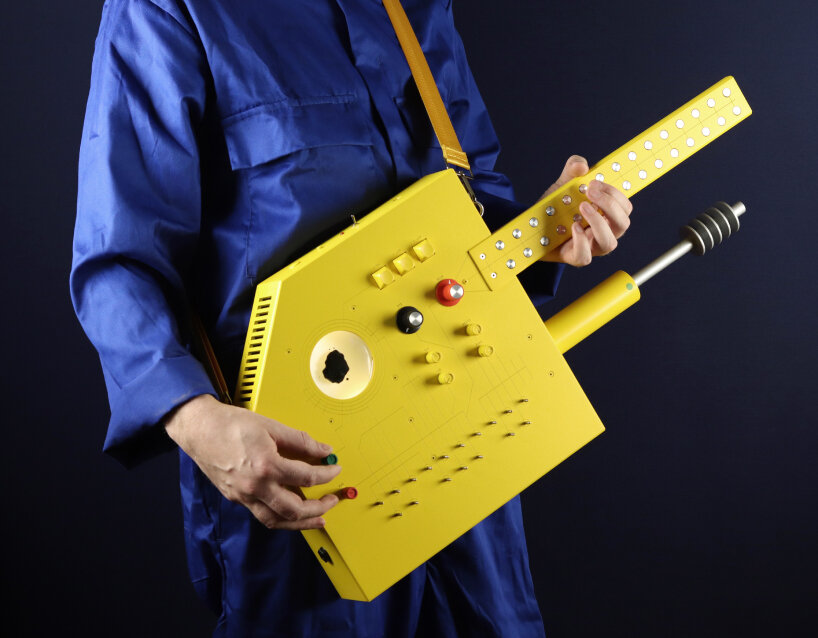
Extraterrestrial Guitar Thing (read more here) | all images courtesy of Love Hultén
From woodworking to audiovisual contraptions
As a child, the Swedish artist spent hours dismantling electronics simply to understand how they worked. During his studies at HDK-Valand in Sweden, he discovered woodworking, eventually bringing the two interests together. ‘I started to experiment with audiovisual contraptions combining traditional craftsmanship with modern technology, and found my niche,’ he told designboom in 2024. ‘The industry is pretty monotonous and I guess I offer something different. A personal view on the world, via objects. My pieces are one-offs and while often being very conceptual, they still have to work in order to become genuine alternatives, be something more than just eye-catching objects.’
That emphasis on interaction runs through Hultén’s work. Whether building synthesizers, game consoles, or listening devices, he rarely settles for familiar controls. A turntable is operated by steering a bright red crane across the record. Cacti and bonsai trees become musical collaborators through biodata. Ferrofluid pulses with sound, while marbles trigger melodies as they move through miniature mechanisms. Each project proposes its own way of playing, and in order to interact, people are encouraged to slow down and engage with the object in front of them.
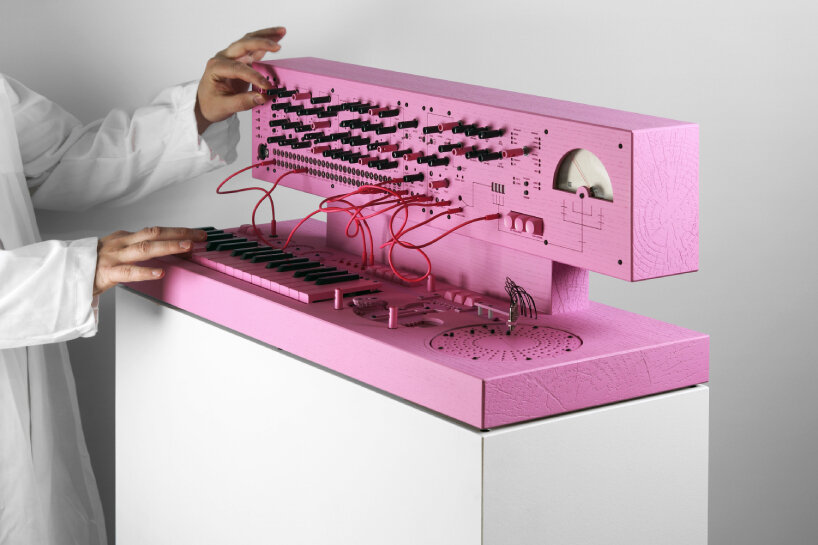
pink noise lab with Taiga, 2xLPG and Microcosm (read more here)
Rethinking familiar interfaces
Play, in Hultén’s practice, is a design method. ‘I play a lot with values and standards, suggesting a different perspective on how to relate and interact with objects,’ he explains. He reconstructs familiar interfaces through unexpected references drawn from arcade cabinets, vintage laboratory equipment, science fiction, mechanical toys, and mid-century electronics. The projects propose a different way of engaging with technology, asking users to rediscover wonder through physical interaction.
Although his objects are often described as retro-futuristic, Hultén rejects nostalgia as an end in itself. ‘Nostalgia is involved to a certain extent, yes, but it’s not looking backwards,’ he says. ‘It’s taking steps in different directions simultaneously by using fragments from both past and today, creating unique and balanced objects.’ His references rarely recreate historical products. Instead, they invent parallel histories where craftsmanship, analog mechanics, and contemporary electronics evolved side by side.

CXM 1978
making technology tangible
This becomes particularly evident in projects such as Desert Songs and Tegel, where cacti and bonsai trees generate sound through biodata, or Sebastian, whose mechanical crab dances to MIDI signals. These machines, akin to fictional scientific instruments, borrow the visual language of laboratories and exploratory technology aiming to spark curiosity. Hultén himself describes his fascination with the mysterious atmosphere of science fiction bio-stations, environments that place familiar living organisms into unfamiliar technological contexts.
Across all of these projects, woodworking, laser cutting, resin casting, electronics, programming, and mechanical engineering shape the same object. This hybrid process reflects Hultén’s belief that digital and handmade practices are not opposing forces but they complement each other.
As interfaces become flatter, frictionless, and increasingly invisible, Hultén’s machines expose their mechanisms. Motors remain visible. Switches click. Sliders travel through their full range. Ferrofluid dances inside transparent chambers. Every movement produces immediate physical feedback. As he puts it, ‘The instant feedback we get when interacting with something physical connects all the right dots in ways a digital interface never could.’

Magicos-2 (read more here)

Crane-controlled record player (read more here)
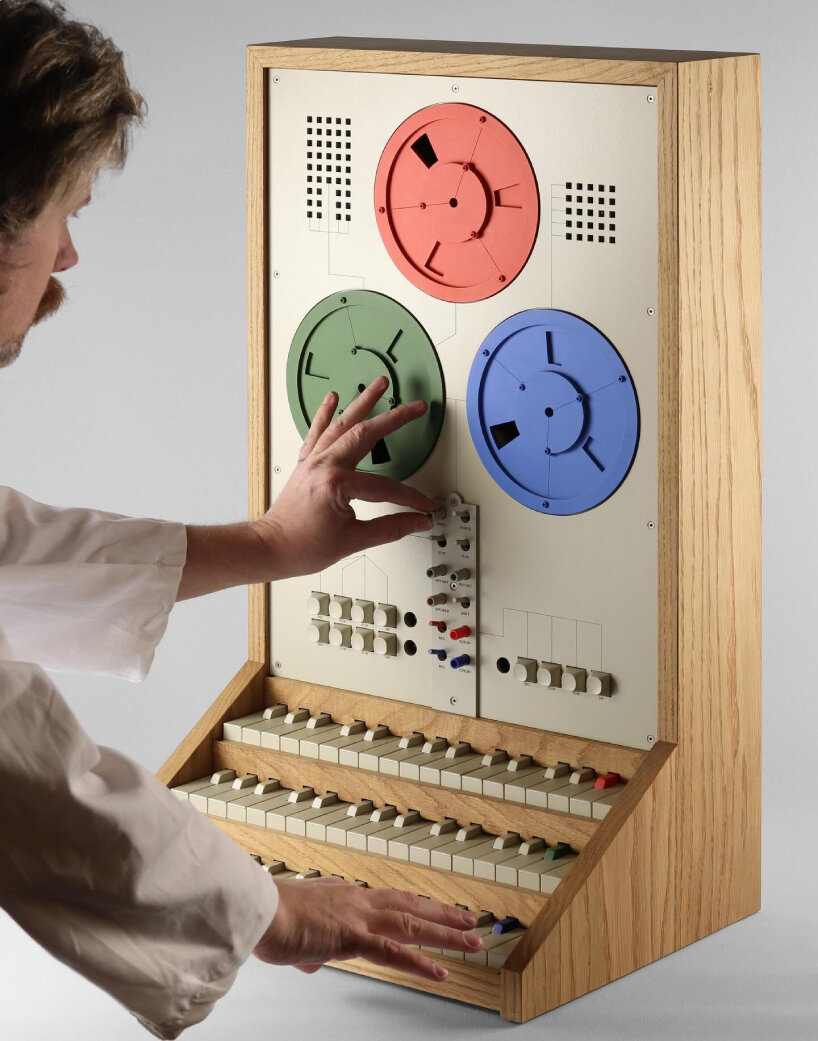
RGB Stepper Motor Driven Synth (read more here)
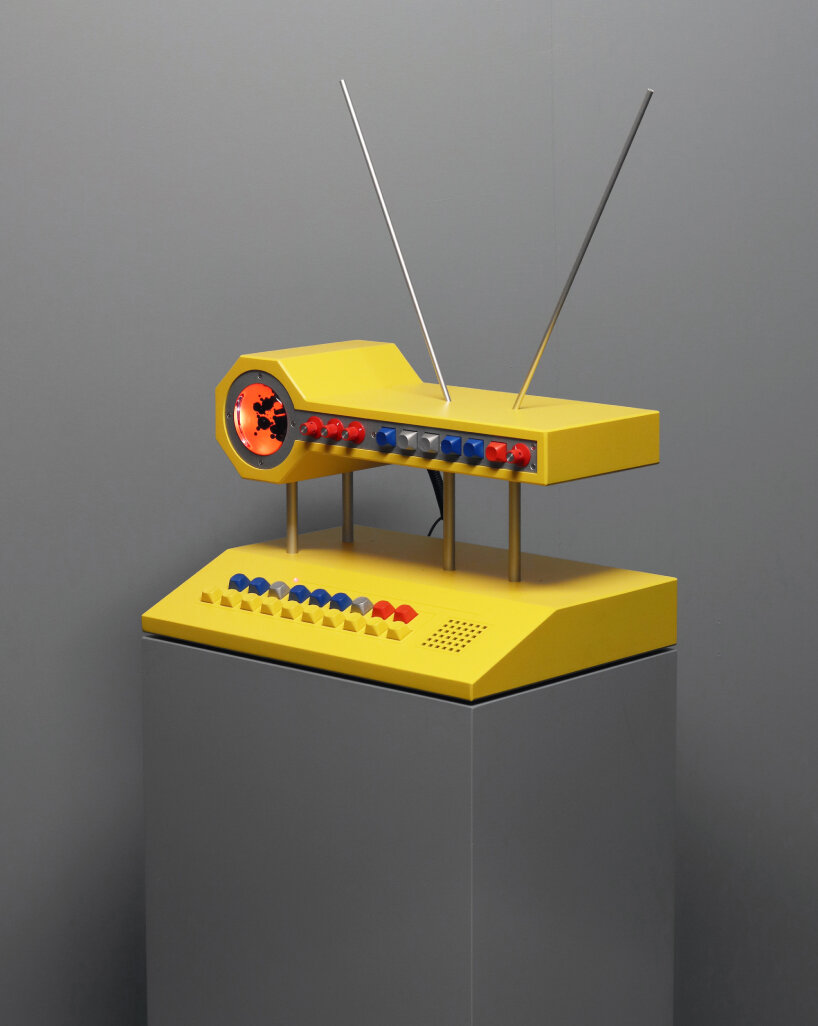
Y-17 (read more here)
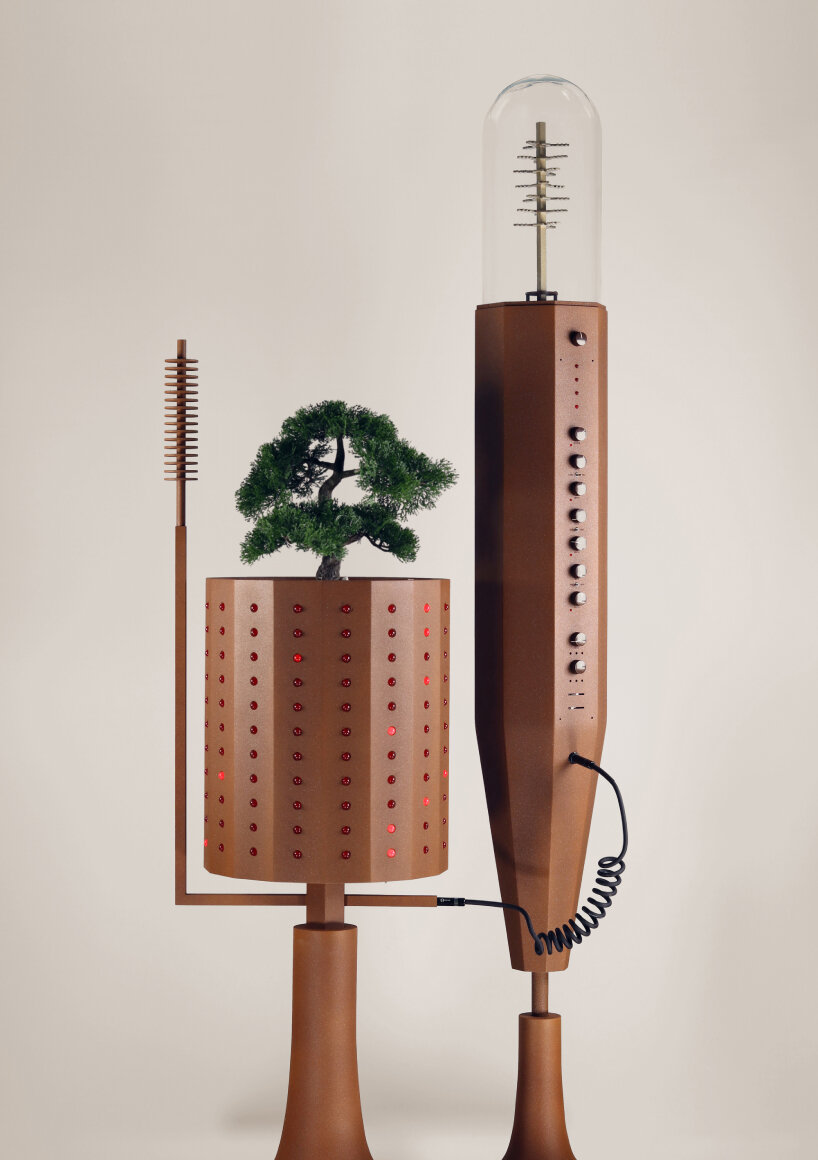
biodata synthesizer Hymns from the Sun
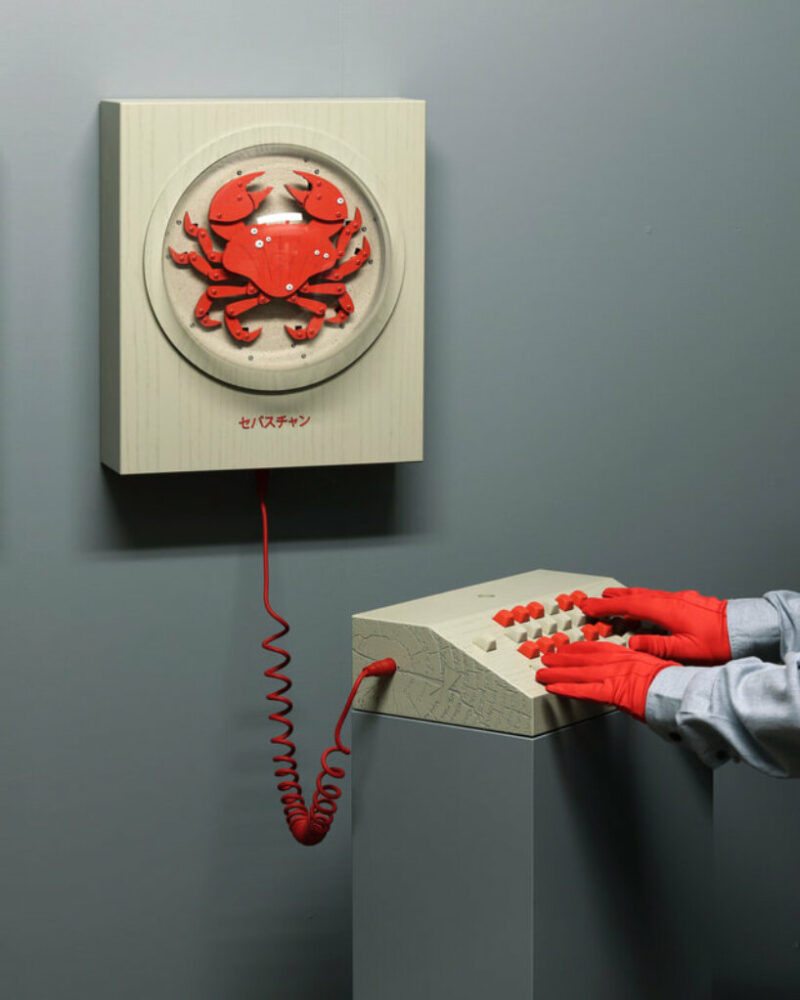
Sebastian
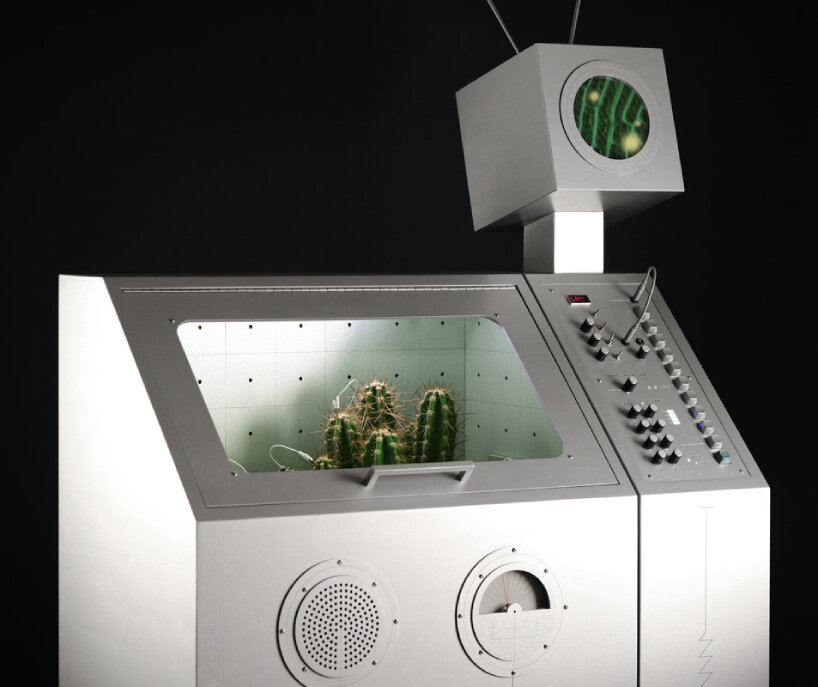
Desert Songs uses Plantwave, a small device that translates biodata from organic material into MIDI (read more here)
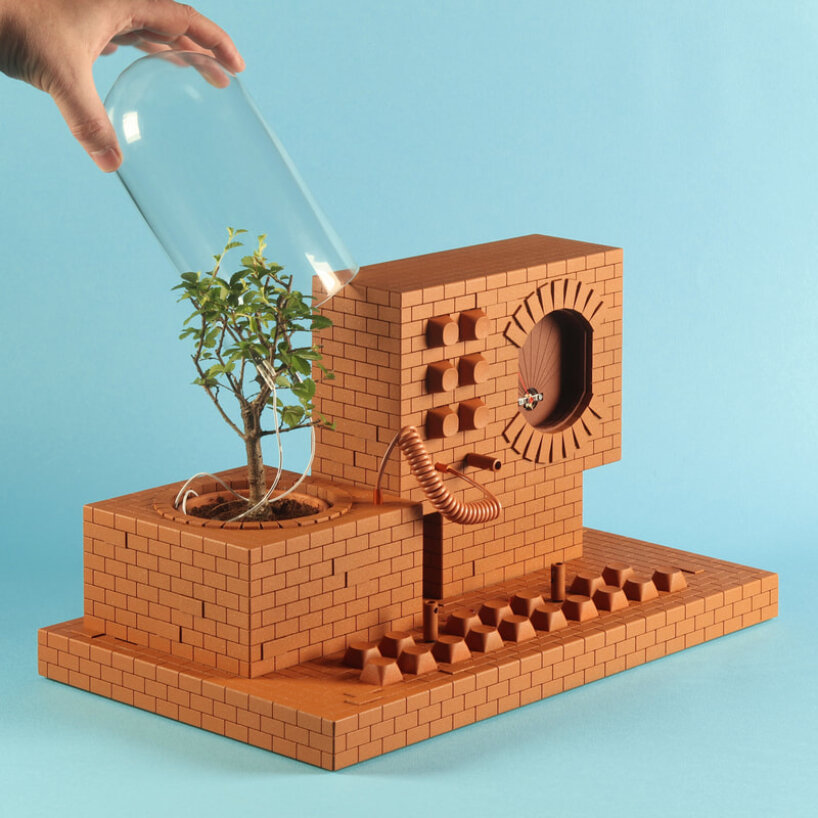
Tegel (read more here)
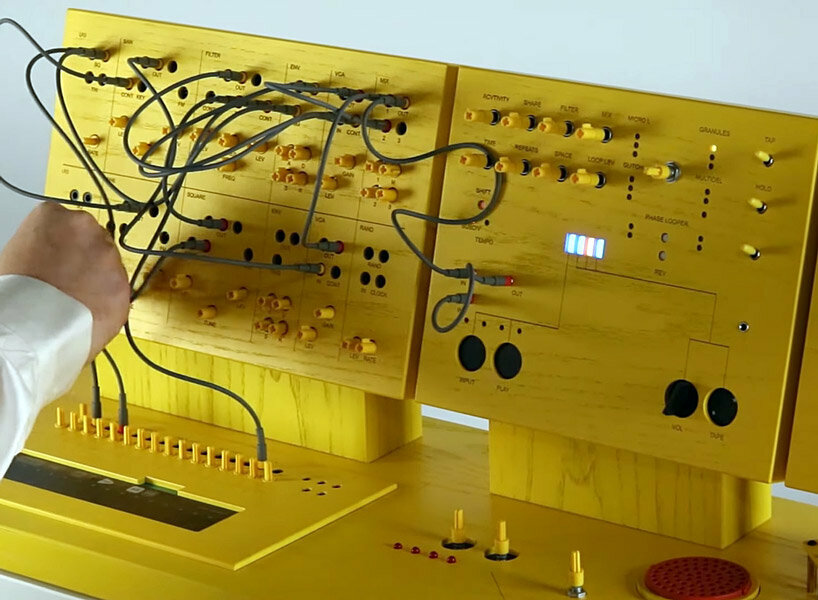
TE-LAB (read more here)

Bivalvia (read more here)
This article is part of designboom’s PLAY chapter, exploring what would happen if form didn’t follow function, but pleasure. Discover more stories that celebrate joy, imagination and playfulness here.
The post why love hultén keeps building sound machines we want to interact with appeared first on designboom | architecture & design magazine.


